












How Can You Support Us?
Our focus is on Black women and girls for several critical and important reasons. By and large, Black women and children worldwide top the list of victims of violent crime, make up increasing rates of health disparities, account for the greatest proportion of HIV/AIDs, and continue to exist on the margins of society facing gender and economic inequities and injustices.
Please make note of the following:
- One-quarter of the African American population lives
in poverty, which negatively influences health status
and complicates access to health services.
- African American women are less likely than other
women to get quality healthcare.
- �Mortality rates for African-American women are
higher than any other racial or ethnic group for nearly
every major cause of death, including breast cancer.
Black women with breast cancer are nearly 30% more
likely to die from it than white women, and less likely
to get life-saving treatments.�
- �African-American women are 85% more likely to get
diabetes, a major complication for heart disease. And,
like breast cancer, more black women die from heart
disease than white women.�
- Research conducted by the Centers for Disease
Control in neighborhood interviews with over 650 African
American women indicate that women with high levels of
daily stress report poorer health and increased symptoms
of depression.
- �Young women, women who are separated, divorced or
single, low- income women and African-American women are
disproportionately victims of assault and rape.�
- African American women are disproportionately
affected by HIV. Of all the women living with AIDS in
the U.S., 60% are African American and two out of three
African American women got HIV from having unprotected
sex with a man. In 2002, HIV/AIDS was the number 1 cause
of death for African American women aged 25�34 years.
- African American females and males have the highest
rates of imprisonment in state or federal prisons and
local jails by ethnicity and in all age groups in the
United States.
- In addition, African American children bear a
disproportionate burden of many health and social
problems as well. For example:
- One in four (26 percent) young women between the
ages of 14 and 19 in the United States � or 3.2 million
teenage girls � is infected with at least one of the
most common sexually transmitted diseases. One in two
(fifty percent) of African-American women (48 percent)
are infected with an STD, compared to one in five or
(twenty percent) of young white women.
- The number of black teens having babies increased
more than any other group in a recent study conducted by
the Centers for Disease Control.
- The percentage of pre-term birth and low birth
weight is significantly higher among African American
infants than among infants of any other ethnic group
which can often have deleterious developmental effects
affecting schooling.
- Infant, child, and adolescent mortality rates are
higher for African Americans than for any other ethnic
group.
- African American girls are among those at highest
risk for becoming overweight. As a result, some medical
doctors recommend that African American female teenagers
know their blood pressure, cholesterol, and blood sugar
levels.
- Research conducted by Cornell University shows that
African women working on the African continent can
negatively affect children's health in that it often
diminishes the quantity or quality of child care
resulting in serious adverse consequences for the health
of preschool age children and disproportionately
impinges on girls� ability to attend school particularly
if they have younger siblings to care for and other
domestic responsibilities.
The U.S. Census Bureau,
(NBC Nightly News Special Report on African American Women)
CDC
National Organization for Women, Centers for Disease Control and Prevention National
Institute of Child Health and Human Development,
Sacred Sistahs seeks to improve the overall self concept of these women and children so that they will become productive and fully functioning members of world living their best lives and prepared to give the world, and us, their best. It is our goal to empower these women and prevent our young women from becoming statistics.
With your donation, you can join us in
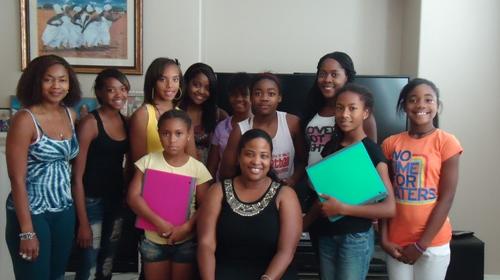
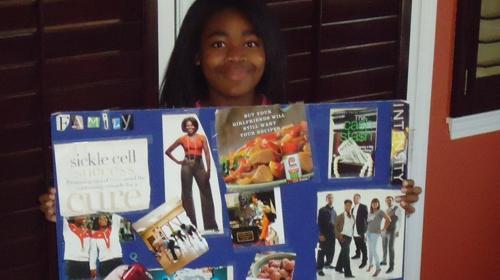
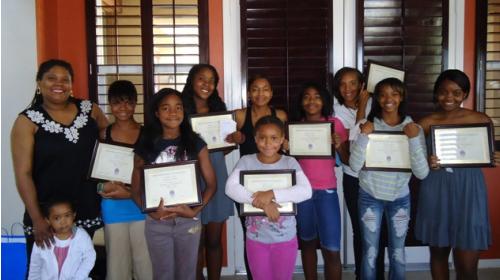
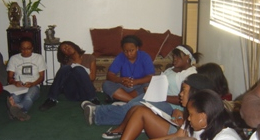
- Conducting rites of passage programs for young women
with focused sessions on education, health, and
financial literacy
- Providing scholarships to eligible students wanting
to attend college
- Investing in and sponsoring African children�s,
especially girls�, educational expenses and providing
information to African families on the benefits and
options for education
- Offering care packages to violated women and
children at various local Women�s and Children�s Trauma
Centers
We welcome your support of Sacred Sistahs, Inc. in its mission to empower, serve, and improve the overall health and well-being of African American and African women and children through education and scholarships, community service, rites of passage programs, mentorship, and sponsorship. Investing in the education of young African women now will have longstanding benefits to us in the future by making the institutionalization of education for all girls one that will cycle through generation after generation. What�s more, how empowering for these women it would be if they could personally ensure that their daughter�s education became a reality. We are reminded that �poor schooling for girls can have a devastating effect that is passed on intergenerationally, since a mother's education is strongly linked to household income, daughters' education and child health.�
Please help us. Your gracious tax deductible donation can be sent to:
Sacred Sistahs, Inc.
4790 Dovehurst Way
Fontana, CA 92336
or by Pay Pal

Sacred Sistahs, Inc. is a 501(c)(3) non-profit organization. For more information, you may also contact us at info@sacredsistahsinc.org
ph: (909) 910-7564
info@sacredsistahsinc.org
TwitterFacebook